FOR INDUSTRIAL AND LABORATORY RESEARCH USE ONLY. NOT FOR DIRECT HUMAN CONSUMPTION, THERAPEUTIC OR HOUSEHOLD USE.
For industrial manufacturing and laboratory research purposes only.
Product Specifications
| Parameter | Value |
|---|
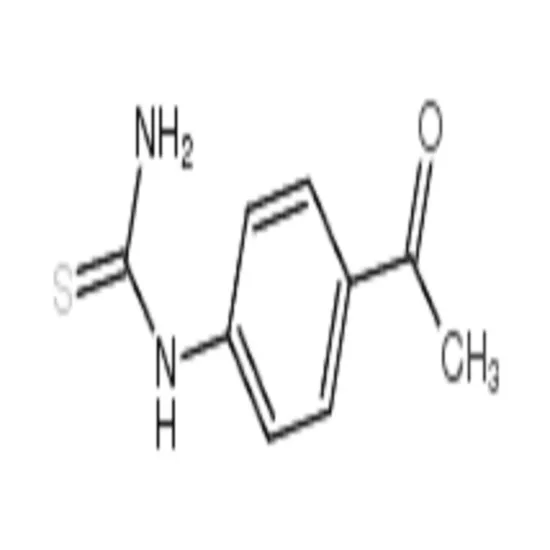
| Product Name | 1-(4-Acetylphenyl)-2-Thiourea |
| CAS Number | 71680-92-7 |
| Purity | 99% |
| Molecular Formula | C9h10n2OS |
| Melting Point | 215 °c |
| Boiling Point | 354.3℃ at 760 Mmhg |
| Packing | 25kgs |
| Transport Package | by Foil - Alum Bag or Paper Drum |
| Specification | 250kg/drum Or 1, 250kg/IBC |
| Origin | Hangzhou |
| HS Code | 2924210090 |
Overcoming Purity and Supply Challenges with 1-(4-Acetylphenyl)-2-Thiourea CAS 71680-92-7
We've witnessed countless production disruptions in chemical manufacturing—unstable raw material purity causing unexpected副反应, inconsistent batch quality derailing research reproducibility, and delayed bulk orders halting production lines. In our 10+ years serving industrial clients, these issues remain the top hurdles for maintaining operational efficiency.
A Stable and Reliable Chemical Supply Solution
Our 1-(4-Acetylphenyl)-2-Thiourea addresses these critical pain points through rigorous quality control and a resilient supply chain. As a comprehensive industrial chemical supplier with global warehousing capabilities, we ensure consistent availability from kilogram to ton-level orders, backed by a supply chain system designed to minimize delivery delays even during market fluctuations.
Typical Industrial Applications
This ISO certified reference material finds essential use in industrial chemical synthesis and laboratory research processes. Its high purity特性 makes it valuable as an intermediate in specialized manufacturing and as a calibration standard for analytical procedures, providing reliable performance in controlled industrial environments.
Why Key Specifications Matter
The 99% purity of our 1-(4-Acetylphenyl)-2-Thiourea is critical for reducing副反应 and杂质 interference in synthesis processes. Its well-defined melting point (215°C) ensures consistent behavior in temperature-sensitive reactions, while the precise boiling point (354.3°C at 760 mmHg) allows for accurate distillation control. The standardized packaging options—from 25kg foil-alum bags to 250kg drums—facilitate safe storage and handling, minimizing contamination risks during production.
What You Gain With Our Product
Choosing our high purity 1-(4-Acetylphenyl)-2-Thiourea mitigates the risks of using substandard materials: reduced production waste from failed reactions, improved process consistency, and compliance with strict industrial quality standards. As an ISO certified chemical reference material, it meets the stringent requirements of modern manufacturing, where material reliability directly impacts product quality and operational costs.
Why You Can Trust Us
Our commitment to quality begins with multi-stage testing—including HPLC and NMR analysis—for every production batch. Each shipment includes a detailed Certificate of Analysis documenting key parameters like purity and melting point. We maintain dedicated production lines to ensure batch-to-batch consistency, supported by a 10,000+ square meter warehousing center that guarantees stable inventory for both small and large-scale orders. Our quality assurance process ensures that any product failing to meet specifications is replaced without additional cost.
Certificate of Analysis & Documentation
Every order of 1-(4-Acetylphenyl)-2-Thiourea is accompanied by a batch-specific Certificate of Analysis and Material Safety Data Sheet. For critical applications, detailed test chromatograms can be provided upon request, and specific batch records are retrievable for up to 5 years from purchase date.
Storage & Handling
- Store in a cool, dry, well-ventilated area, sealed and away from direct sunlight.
- Keep away from incompatible materials, food and feed sources.
- Handle with appropriate personal protective equipment (gloves, goggles, lab coat).
- Follow good industrial hygiene practices. Avoid inhalation and skin contact.
- Refer to MSDS for detailed storage and safety instructions.
How to Place Your Order
Initiate your procurement by submitting a detailed inquiry specifying required quantity and packaging preferences. Our technical team will confirm availability and provide a formal quotation within 24 hours. For first-time users, small sample quantities are available for pre-production testing, followed by seamless scaling to commercial volumes through our standard transaction process.
Frequently Asked Questions
Q: What is the shelf life of 1-(4-Acetylphenyl)-2-Thiourea when properly stored?
A: When stored in original sealed packaging under recommended conditions, the product maintains stability for 24 months from the date of manufacture.
Q: Can this product be used in food, pharmaceutical, or cosmetic applications?
A: No. This product is strictly for industrial and laboratory research use only, not for direct human consumption, therapeutic, or household applications.
What documentation is provided with each shipment?
A: Each shipment includes a Certificate of Analysis (COA), Material Safety Data Sheet (MSDS), and shipping documentation compliant with international transport regulations.
Is custom packaging available for large-scale orders?
A: Yes, we offer custom packaging solutions for bulk orders. Contact our sales team to discuss specific requirements for your production facility.
How is the purity of your 1-(4-Acetylphenyl)-2-Thiourea verified?
A: Purity is determined through a combination of HPLC and NMR analysis, with results documented in each batch's Certificate of Analysis. Critical impurities are quantified to ensure compliance with 99% purity specifications.
Usage Notice: Supplied exclusively for industrial manufacturing and laboratory research purposes. The buyer is fully responsible for complying with all local laws, regulations and safety requirements for its use.

 Fine Chemical Intermediates