FOR INDUSTRIAL AND LABORATORY RESEARCH USE ONLY. NOT FOR DIRECT HUMAN CONSUMPTION, THERAPEUTIC OR HOUSEHOLD USE.
For industrial manufacturing and laboratory research purposes only.
Product Specifications
| Parameter | Value |
|---|
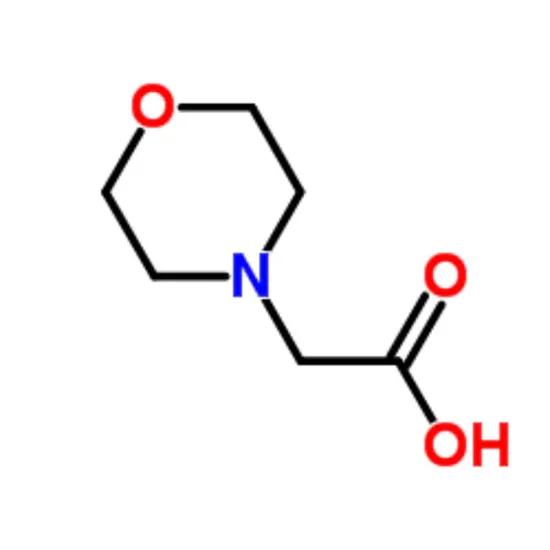
| Product Name | Morpholin-4-Yl-Acetic Acid |
| CAS Number | 3235-69-6 |
| Purity | >99% |
| State | Solid |
| Melting Point | 162-164℃ |
| Boiling Point | 271.9±25.0 °c at 760 Mmhg |
| Packing | 25kgs |
| Transport Package | by Foil - Alum Bag or Paper Drum |
| Specification | 250kg/drum Or 1, 250kg/IBC |
| HS Code | 2934999090 |
| Production Capacity | 20t/Year |
| Origin | Hangzhou |
Overcoming Purity Fluctuations with Morpholin-4-Yl-Acetic Acid 99% (CAS 3235-69-6)
We've witnessed countless production delays caused by inconsistent raw material quality—batch-to-batch purity variations leading to unexpected副反应, and supply chain disruptions leaving factories idle. In the fine chemical industry, these issues aren't just inconvenient; they directly impact your bottom line and research credibility.
A Stable and Reliable Chemical Supply Solution
Our Morpholin-4-Yl-Acetic Acid addresses these critical pain points through a combination of rigorous quality control and a resilient supply chain. With a dedicated 20t/year production capacity and strategic warehousing, we ensure consistent availability from kilogram to ton-level orders, supporting both small-scale research and large-scale manufacturing needs across the Asia-Pacific region and beyond.
Typical Industrial Applications
This high purity morpholinyl acetic acid serves as a key intermediate in organic synthesis processes, particularly valued in pharmaceutical R&D and specialty chemical manufacturing. Its solid form allows for precise dosing and easy integration into various industrial production lines, making it a versatile component in controlled chemical reactions and process development.
Why Key Specifications Matter
The >99% purity of our Morpholin-4-Yl-Acetic Acid minimizes impurity interference, ensuring cleaner reaction pathways and reducing the need for complex purification steps. Its defined melting point (162-164℃) provides critical process control data for temperature-sensitive reactions, while the boiling point specification (271.9±25.0 °c at 760 Mmhg) aids in distillation process design. The 25kg pack size offers optimal handling efficiency for industrial operations, balancing between material freshness and logistical practicality.
What You Gain With Our Product
Choosing our industrial chemical solid means investing in production consistency that reduces waste and rework costs. Unlike lower quality alternatives that introduce variability, our strict quality standards help maintain stable reaction yields and product specifications. Backed by our established supply chain infrastructure, we offer price stability and reliable delivery timelines, addressing the core challenges facing today's chemical procurement managers.
Why You Can Trust Us
Every batch of Morpholin-4-Yl-Acetic Acid undergoes comprehensive testing before release, with analytical methods including HPLC to verify purity claims. We provide detailed Certificates of Analysis with each shipment, ensuring full traceability of your raw materials. Our production facility adheres to strict quality management protocols, and we maintain flexible production scheduling to accommodate both regular orders and urgent requirements, supported by our global logistics network.
Certificate of Analysis & Documentation
Each delivery includes a batch-specific Certificate of Analysis detailing key quality parameters and compliance data. Material Safety Data Sheets (MSDS) are provided to ensure proper handling and storage. For research institutions requiring detailed analytical records, additional documentation including chromatographic profiles can be arranged upon request.
Storage & Handling
- Store in a cool, dry, well-ventilated area, sealed and away from direct sunlight.
- Keep away from incompatible materials, food and feed sources.
- Handle with appropriate personal protective equipment (gloves, goggles, lab coat).
- Follow good industrial hygiene practices. Avoid inhalation and skin contact.
- Refer to MSDS for detailed storage and safety instructions.
How to Place Your Order
Initiate your procurement by submitting a detailed inquiry specifying required quantity and packaging preferences. Our technical team can provide additional product information or arrange sample testing for qualification. Once specifications are confirmed, we'll issue a formal quotation with delivery timeline, and upon order confirmation, coordinate production and logistics to meet your schedule requirements.
Frequently Asked Questions
Q: What is the shelf life of Morpholin-4-Yl-Acetic Acid?
A: When stored properly in sealed containers under recommended conditions, the product maintains stability for 24 months from the date of manufacture.
Q: Can this product be used in food, pharmaceutical, or cosmetic applications?
A: No. This product is supplied exclusively FOR INDUSTRIAL AND LABORATORY RESEARCH USE ONLY. NOT FOR DIRECT HUMAN CONSUMPTION, THERAPEUTIC OR HOUSEHOLD USE.
Q: What documentation is provided with each shipment?
A: Each order includes a Certificate of Analysis (COA) and Material Safety Data Sheet (MSDS) specific to the batch shipped.
Q: Are custom packaging options available?
A: Yes, we offer alternative packaging including 250kg drums or 1,250kg IBC containers to accommodate different handling and storage requirements.
Q: How is product purity verified?
A: Purity is determined through high-performance liquid chromatography (HPLC) analysis, with results documented in the batch-specific COA.
Usage Notice: Supplied exclusively for industrial manufacturing and laboratory research purposes. The buyer is fully responsible for complying with all local laws, regulations and safety requirements for its use.

 Pharma Intermediates