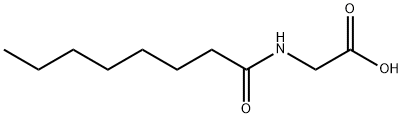
Capryloyl Glycine CAS #14246-53-8

Capryloyl glycine is the main component of dermal structural protein and plays an extremely important job in the skin. One of its functions is to balance the pH value. The reason why the skin??s pH is around 5.5 is because it contains various weak acids, proteins and fats. When different ingredients react with the skin??s fatty proteins, these proteins undergo decarboxylation reactions, thereby changing the skin??s pH. Too high or too low pH is not good, especially for acne-prone skin. Many studies have concluded that skin with acne-prone skin has a higher pH value. The presence of Capryloyl glycine can provide free carboxyl groups and maintain the balance of skin pH.

Capryloyl Glycine CAS #14246-53-8
In Stock
FDA EU Reg. ISO 9001 HACCP Halal Kosher GMP

Technical Specifications

Product Name Capryloyl Glycine CAS #14246-53-8

Full COA, MSDS, FDA/EU compliance documentation and third-party lab reports available upon request.

Product Description

Capryloyl glycine is the main component of dermal structural protein and plays an extremely important job in the skin. One of its functions is to balance the pH value. The reason why the skin??s pH is around 5.5 is because it contains various weak acids, proteins and fats. When different ingredients react with the skin??s fatty proteins, these proteins undergo decarboxylation reactions, thereby changing the skin??s pH. Too high or too low pH is not good, especially for acne-prone skin.

Many studies have concluded that skin with acne-prone skin has a higher pH value. The presence of Capryloyl glycine can provide free carboxyl groups and maintain the balance of skin pH.

Description

Capryloyl Glycine CAS #14246-53-8

Caprylylglycine Basic information
Product Name: Caprylylglycine
Synonyms: Glycine, N-(1-oxooctyl)-;2-octanoylaminoacetic acid;N-Octanoylglycine;CAPRYLYLGLYCINE;N-Capryloylglycine;Einecs 238-122-3;N-Octanoylglycine-d2;CAPRYLOYL GLYCIN
CAS: 14246-53-8
MF: C10H19NO3
MW: 201.26
EINECS: 238-122-3
Product Categories:
Mol File: 14246-53-8.mol
Caprylylglycine Structure
Caprylylglycine Chemical Properties
Melting point 102-103 ??C
Boiling point 403.9??28.0 ??C(Predicted)
density 1.036??0.06 g/cm3(Predicted)
vapor pressure 0Pa at 25??
storage temp. Sealed in dry,Room Temperature
solubility DMSO (Slightly), Methanol (Slightly)
form Solid
pka 3.62??0.10(Predicted)
color White to Off-White
Water Solubility 1.557g/L at 20??
InChI InChI=1S/C10H19NO3/c1-2-3-4-5-6-7-9(12)11-8-10(13)14/h2-8H2,1H3,(H,11,12)(H,13,14)
InChIKey SAVLIIGUQOSOEP-UHFFFAOYSA-N
SMILES C(O)(=O)CNC(=O)CCCCCCC
LogP 2.052 at 22??
CAS DataBase Reference 14246-53-8(CAS DataBase Reference)
EPA Substance Registry System Glycine, N-(1-oxooctyl)- (14246-53-8)


Related Products
Octyl 4-methoxycinnamate CAS#5466-77-3
Daily Chemicals

Octyl 4-methoxycinnamate CAS#5466-77-3

Octyl 4-methoxycinnamate, scientifically known as 2-Ethylhexyl 4-Methoxycinnamate, is a highly effective organic UV filter commonly used in the formulation of sunscreens and cosmetic products. This compound is renowned for its ability to absorb ultraviolet B (UVB) radiation, providing a reliable defense against the sun's harmful effects on the skin. Characterized by its chemical formula C19H28O3, Octyl 4-methoxycinnamate is a liquid ester that is readily soluble in organic solvents. It is valued for its photostability, which means it maintains its protective properties even after prolonged exposure to sunlight. This feature makes it an ideal ingredient for products designed to offer long-lasting sun protection. In addition to its UVB absorption capabilities, Octyl 4-methoxycinnamate is also appreciated for its compatibility with other UV filters, allowing for the creation of broad-spectrum sunscreens. It contributes to the development of formulations that are non-greasy and cosmetically elegant, suitable for a variety of skin types. As a key component in sun care products, Octyl 4-methoxycinnamate supports the skin's health by preventing sunburn, reducing the risk of skin cancer, and delaying the signs of photoaging. Its safety profile and efficacy make it a preferred choice in the personal care and dermatological industries for sun protection solutions.

View Details →
Isopropyl myristate CAS#110-27-0
Daily Chemicals

Isopropyl myristate CAS#110-27-0

Isopropyl myristate (IPM) is an ester-based compound commonly utilized as an emollient and solvent in the cosmetic and personal care industry. Derived from myristic acid and isopropanol, IPM possesses a lightweight, non-greasy texture that allows for easy absorption and spreadability on the skin. Chemically, it is represented by the formula C18H36O2, and it is known for its ability to dissolve a wide range of lipophilic (fat-soluble) ingredients, making it an ideal carrier for fragrances, vitamins, and other active components in formulations. IPM is also valued for its emollient properties, which help to soften and smooth the skin without leaving a residue. This ester is non-comedogenic, meaning it does not clog pores, and is suitable for various skin types, including sensitive and acne-prone skin. Its stability and compatibility with other ingredients make it a versatile component in the creation of lotions, creams, makeup products, and sunscreens. In summary, isopropyl myristate is a beneficial ingredient in skincare and cosmetic products due to its solubilizing capabilities, emollience, and non-comedogenic nature, offering a smooth application and enhancing the sensory experience without compromising skin health.

View Details →
Paeoniflorin CAS# 23180-57-6
Daily Chemicals

Paeoniflorin CAS# 23180-57-6

Peony is the dried root of the perennial herbaceous plant Paeoniaceae in the Paeoniaceae family. It is bitter, sour and slightly cold. It returns to the liver and spleen meridians. It has the functions of calming the liver and relieving pain, nourishing blood and regulating menstruation, astringing yin and stopping sweating. It is used for headaches, dizziness, rib pain, abdominal pain, cramps and pain in limbs, blood deficiency and chlorosis, irregular menstruation, spontaneous perspiration, and night sweats. Paeoniflorin is the main functional component of peony. It is an important physiologically active substance with anti-inflammatory effects, immune system effects, liver protection effects, analgesic effects, etc.

View Details →
Polyhexamethyleneguanidine hydrochloride CAS#57028-96-3
Daily Chemicals

Polyhexamethyleneguanidine hydrochloride CAS#57028-96-3

Polyhexamethylene guanidine hydrochloride, often abbreviated as PHMG-HCl, is a high molecular weight polymeric biguanide compound known for its potent antimicrobial properties. With a chemical structure that features a long chain of methylene groups bridged by guanidine units, PHMG-HCl is effective against a broad spectrum of microorganisms, including bacteria, viruses, and fungi. This hydrochloride salt form of PHMG is highly soluble in water and is commonly used in various applications due to its non-irritant and non-toxic nature to human skin and mucous membranes. It is widely recognized for its ability to form a colorless and odorless solution, making it an ideal choice for use in personal care products, medical disinfectants, and water treatment processes. The versatility of PHMG-HCl lies in its cationic nature, which allows it to bind to negatively charged microbial cell walls, disrupting their integrity and leading to cell death. This mechanism of action contributes to its effectiveness as a preservative and disinfectant. Moreover, its substantivity, or the ability to adhere to surfaces, enhances its long-lasting antimicrobial activity. In summary, Polyhexamethylene guanidine hydrochloride is a reliable and efficient antimicrobial agent, pivotal in industries where hygiene and cleanliness are paramount, offering a safe and sustainable solution for microbial control.

View Details →
Ready to Order?

Get Free Samples & Full
Certification Package Today

No minimum order for samples. COA, MSDS, FDA/EU certificates and third-party lab reports delivered with every sample. Technical team responds within 24 hours.