Red Flags to Avoid When Buying Peptide Raw Materials Online?
I get calls from new buyers every week. They found a peptide supplier on Alibaba. The price looks great. They ask me: "Should I order?" My first question back: "Did you verify anything beyond the listing page?"
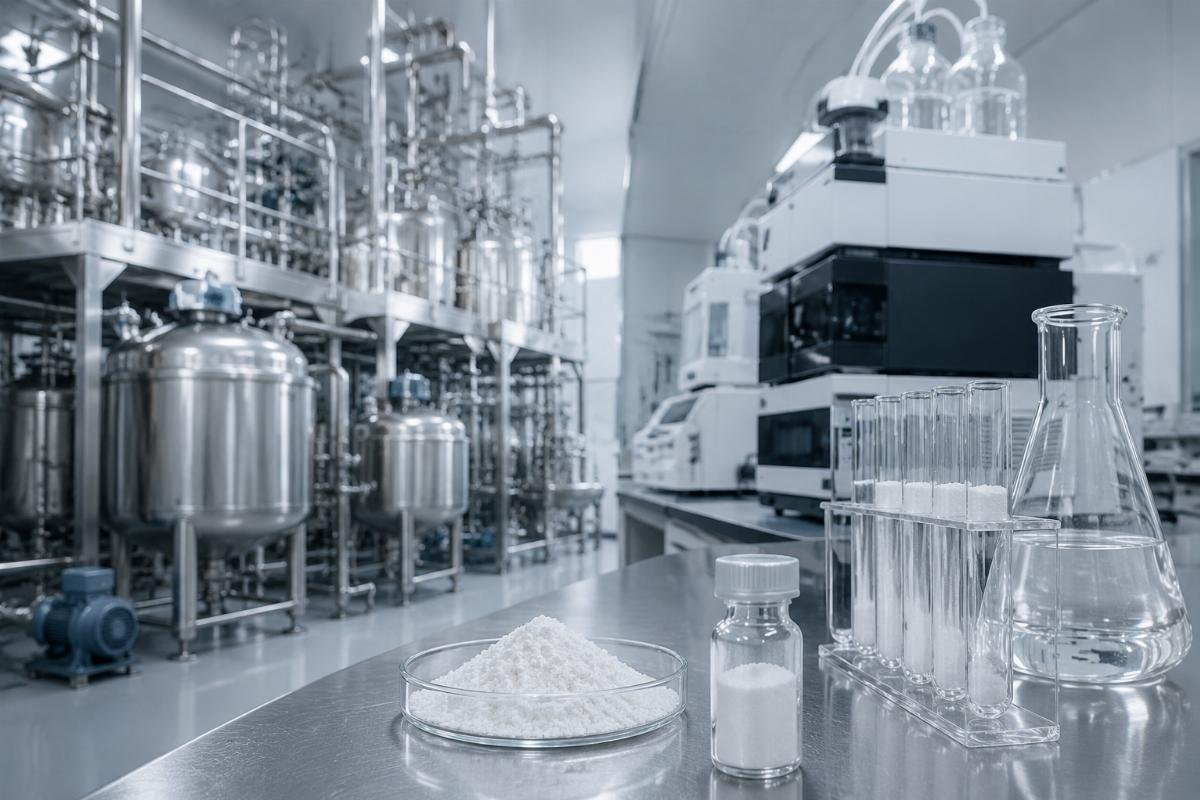
Most peptide buyers lose money not because they picked the wrong product, but because they skipped supplier verification steps that would have revealed red flags in the first conversation. A legitimate GMP peptide factory[^1] and a document reseller can look identical online—until you ask the right boundary questions.

I have handled buyer inquiries for three years. I have seen the same mistakes repeat. Let me walk you through the warning signs that separate real manufacturers from risky suppliers.
Why Do Price-Only Comparisons Fail for Peptide Purchases?
I quoted Semaglutide[^2] to a German distributor last month. He had three other quotes. Mine was 15% higher. He asked: "Why should I pay more?"
Price differences in peptide raw materials reflect hidden quality variables that buyers only discover after customs clearance[^3]—purity variance between batches, undisclosed impurity profiles, and regulatory compliance gaps that can trigger import holds or downstream manufacturing failures.
What Drives Price Gaps Between Peptide Suppliers?
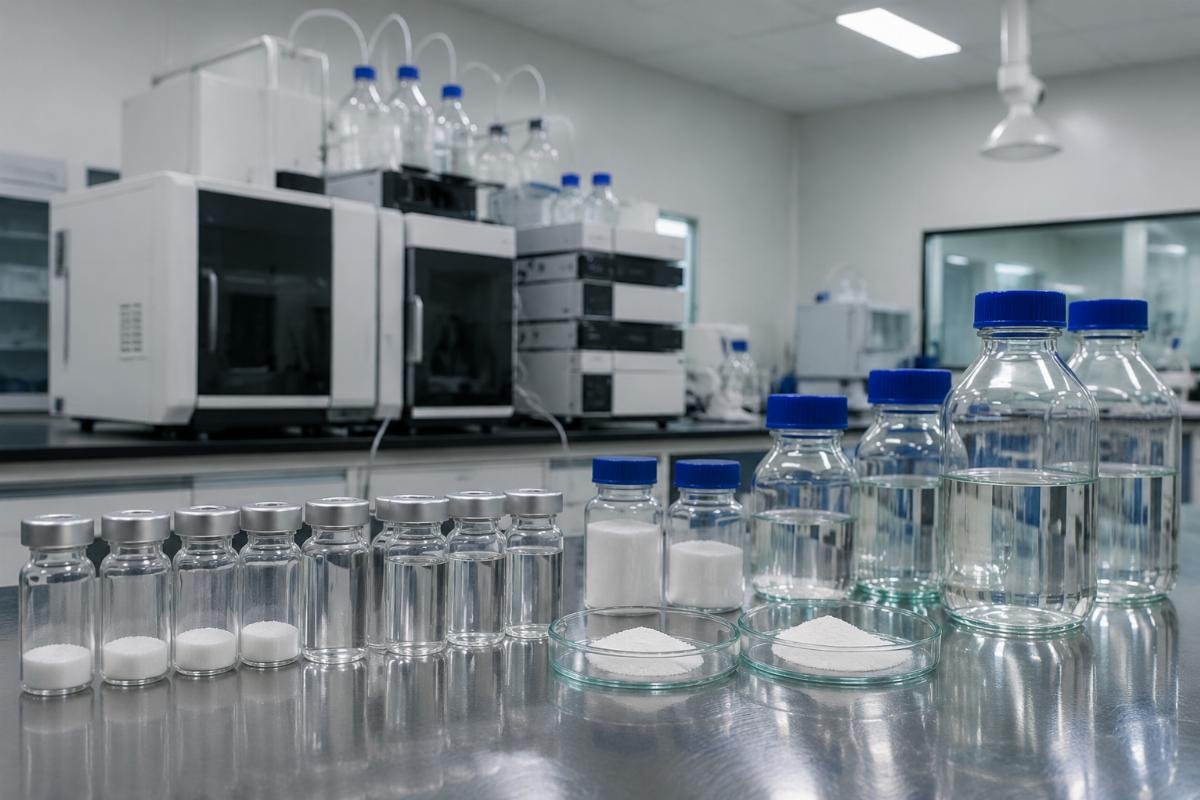
I built this comparison table after reviewing 50+ competitor quotes against our factory output:
| Cost Factor | Budget Supplier Approach | GMP Factory Standard |
|---|---|---|
| Raw Material Grade | Industrial-grade amino acids | Pharma-grade protected amino acids[^4] |
| Synthesis Scale | Small batch (10-50g) repackaged | Continuous production lines (1kg+ batches) |
| Purification Cycles | Single-pass HPLC | Multiple recrystallization + prep-HPLC[^5] |
| Impurity Testing | Total impurity % only | Individual impurity profiling per USP[^6] |
| Batch Documentation | Generic COA template | Full batch record with synthesis logs |
| Retention Samples | Not stored | 2-year cold storage per batch |
| Export Compliance | Freight forwarder handles | Dedicated customs documentation team |
The German buyer called me back three weeks later. His "cheaper" batch failed purity re-test at his QC lab. The 15% savings turned into a 40% loss when he factored in delayed production and re-ordering costs.
I am not saying high price equals quality. I am saying price tells you nothing without verification. A $200/kg Tirzepatide[^7] quote might come from a factory with real GMP workshops. Or it might come from a trader who buys from five different sources and cannot guarantee which batch you will receive.
How Do Hidden Costs Appear After Low-Price Purchases?
I tracked post-purchase issues from my customer service records. These problems show up 30-90 days after buyers choose the lowest quote:
Customs hold scenarios: Buyer receives peptide shipment. Customs requests additional documentation. Supplier cannot provide export license or health certificate. Shipment sits in customs for six weeks. Buyer pays demurrage fees and rush-orders from another supplier.
Purity variance problems: First order tests at 98.5%. Buyer scales up production. Second order tests at 96.8%. Buyer's QC rejects batch. Supplier claims "both batches meet 95% minimum spec" but cannot explain why consistency dropped.
Regulatory audit failures: Buyer uses peptide in medical beauty formulations. Local regulator audits supplier chain. Buyer cannot provide upstream GMP certification. Product line gets suspended pending re-qualification.
Reputational damage: Buyer resells peptide to downstream manufacturers. End product fails safety testing. Investigation traces back to undocumented impurities. Buyer loses three major clients.
I have seen these situations play out differently. The common pattern: buyers who verified supplier capabilities before ordering avoided these costs. Buyers who optimized for price alone paid 5-10x the material savings in recovery expenses.
The real question is not "which supplier quotes lowest" but "which supplier can prove they will deliver the same quality in month six as they did in month one."
What Do Fabricated COA Documents Look Like?
A supplement manufacturer from California sent me a COA last year. He asked: "Can you match this quality?" I looked at the document. Something felt wrong. The batch number format did not match standard peptide synthesis coding. The test date was three months before the listed production date. The lab seal was a generic PNG image.
Certificate of Analysis documents are the easiest supplier qualification to fake because most buyers do not know how to verify the underlying test data—legitimate factories can produce raw chromatography files, batch traceability logs, and third-party lab contact information that document resellers cannot replicate.

Which COA Elements Cannot Be Easily Forged?
I learned this from working with our QC team. Real analytical test reports contain verification points that require actual lab work:
Batch traceability codes: Legitimate factories use structured batch numbers that encode production date, equipment line, and synthesis run. Example: our format is "RP-TRZ-240815-A3" where RP = Ruite Peptide, TRZ = Tirzepatide, 240815 = production date, A3 = reactor line and run number. Generic batch codes like "BATCH001" or "TRZ-2024" signal that no real production system exists.
Chromatography data timestamps: HPLC test files contain embedded timestamps and instrument IDs[^8]. A real factory can send you the raw .d file or .lcd file from the HPLC software, not just a PDF screenshot. If a supplier says "we only provide PDF reports," ask why they cannot export the source data.
Third-party lab verification: Some buyers request split-sample testing at SGS or Intertek[^9]. Real suppliers will tell you: "Send us your preferred lab's sampling protocol and we will coordinate the pickup." Fake suppliers will say: "We already did third-party testing" but cannot provide the lab's direct contact information or original report with lab reference number.
Multi-batch consistency data: A factory that makes peptides regularly should be able to show you purity results from the last 5-10 batches, not just the single "hero batch" that tested highest. If a supplier only ever sends one COA, ask to see historical data.
What Questions Expose Document Fabrication?
I use these verification questions when buyers ask me to confirm our test reports:
"Can you provide the full test chromatogram with retention times and peak integration?" Real answer: "Yes, I will email the PDF export from our HPLC software." Red flag answer: "The chromatogram is proprietary" or "We only share that after you order."
"What is the name and contact of the testing lab?" Real answer: Supplier gives you lab name, city, and contact email—you can call the lab directly to confirm they tested this batch. Red flag answer: "We do in-house testing only" but cannot show you photos of their own HPLC equipment.
"Can I visit your QC lab to observe a retention sample re-test?" Real answer: "Yes, we keep samples for two years. Book a visit and we will re-test the batch in front of you." Red flag answer: "We do not keep samples" or "Lab visits are not allowed for confidentiality reasons."
"Will you provide a retention sample with the order so I can do independent testing?" Real answer: "Yes, we include 5-10g retention sample with every shipment for your QC verification." Red flag answer: "We cannot provide extra samples" or "You need to pay separately for samples."
The California buyer I mentioned earlier tested these questions with his original supplier. The supplier could not answer any of them. He switched to our factory, and we walked him through our QC lab on video call. He saw our HPLC operator run a test in real time. That level of transparency costs us nothing—but document resellers cannot fake it.
How Do You Verify Real Production Capacity vs Reseller Operations?
I took a factory tour call with a buyer from Australia last month. He was evaluating three Chinese suppliers. He asked: "How do I know you actually make peptides instead of just buying from someone else?" I offered to show him our synthesis workshop on live video. Two of his other suppliers said they "could not do video tours for security reasons."
Platform listings and business licenses do not prove manufacturing capability—real production verification requires visual confirmation of synthesis equipment, batch production records, export customs history, and reference calls with existing long-term customers who can confirm supply consistency.
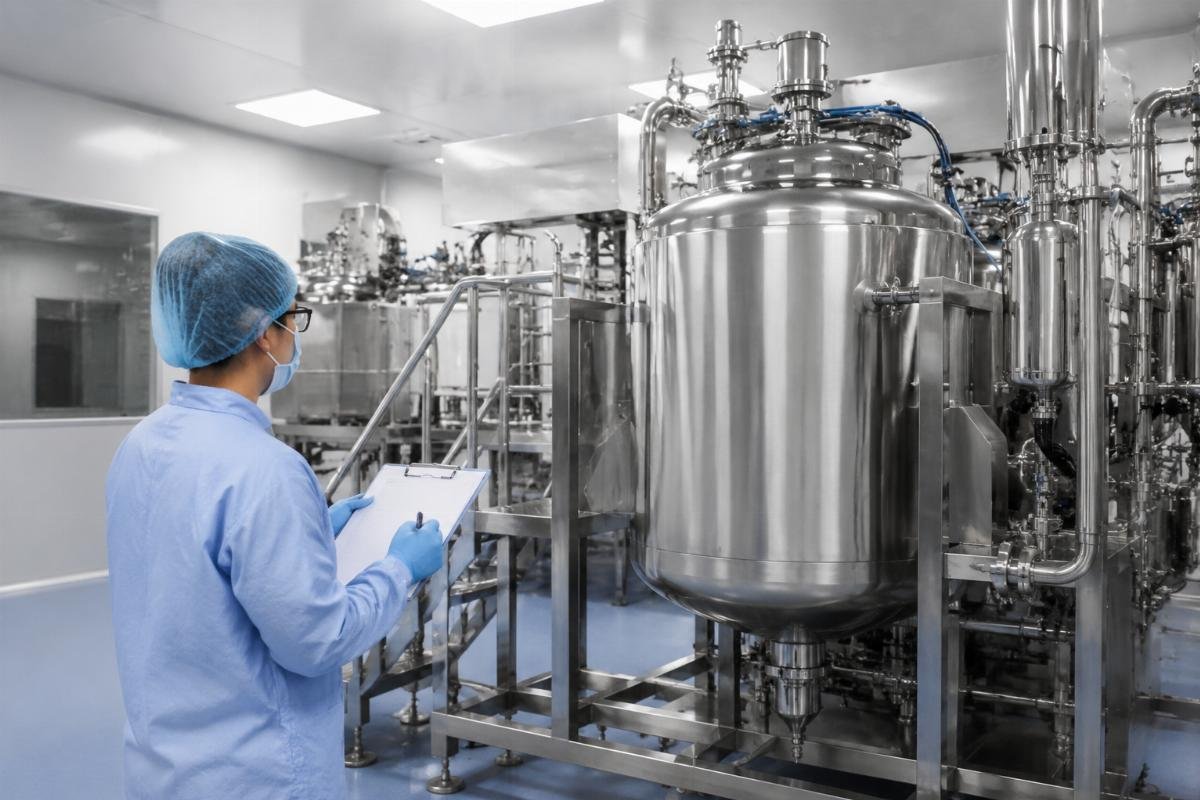
What Visual Evidence Confirms Actual Production Lines?
I keep a verification checklist from my sales training. These items separate factories from traders:
Synthesis reactor setup: Real peptide solid-phase synthesis[^10] requires specialized glass reactor vessels with temperature control and inert gas systems. Ask the supplier: "Can you show me your synthesis reactors on video call?" A factory will show you multiple units running different batches. A reseller will say: "We cannot disclose our production setup."
Purification equipment: HPLC columns for peptide purification cost $5,000-15,000 each and require dedicated prep-HPLC systems. Ask: "How many preparative HPLC columns do you operate?" Real factories will tell you exact numbers and column specifications. Traders will give vague answers.
Cold storage capacity: Peptide raw materials require 2-8°C storage with humidity control[^11]. Ask: "Can you show me your cold storage facility and tell me your total storage capacity?" A factory has dedicated cold rooms with temperature logging systems. A reseller stores product in standard warehouse conditions.
Waste treatment systems: Peptide synthesis produces hazardous organic waste that requires treatment before disposal. Ask: "How do you handle synthesis waste disposal?" Real factories have environmental compliance permits and waste treatment contractors. Traders have never thought about this question.
Which Documentary Evidence Proves Manufacturing History?
I collected these document types from our export compliance team:
| Document Type | What It Proves | How to Verify |
|---|---|---|
| Export customs records | Supplier has shipped peptides internationally before | Request last 6 months customs declarations with product names and buyer countries (names can be redacted) |
| GMP workshop certificate | Facility meets pharmaceutical production standards | Check certificate issuing authority and facility address matches business license |
| Environmental compliance permit | Facility is legally allowed to synthesize peptides | Verify permit number with local environmental bureau |
| Client reference list | Supplier has repeat customers who buy regularly | Request contact info for 2-3 long-term clients you can call directly |
| Batch production logs | Supplier maintains records of every synthesis run | Ask to see batch logs from last quarter showing production dates and output quantities |
| Equipment purchase invoices | Supplier owns the synthesis and testing equipment | Request invoices for HPLC and reactor purchases (can redact prices) |
The Australian buyer used this checklist across his three suppliers. One supplier provided everything within two days. One supplier provided partial documents after two weeks. One supplier stopped responding after he asked for customs records. He placed his order with the first supplier—our factory.
What Questions Reveal Reseller Risk During Initial Contact?
I trained our new sales team on these boundary questions. Real manufacturers can answer immediately. Resellers need to "check with the factory":
"What is your minimum order quantity and can you ship a 100g test batch first?" Real factory answer: "Our standard MOQ is 1kg but we can ship 100g samples at higher per-gram pricing for first-time buyers." Reseller answer: "We only do 1kg minimum" or "We need to check if smaller quantities are available."
"Can I send an independent inspector to your facility before shipment?" Real factory answer: "Yes, we work with SGS and Bureau Veritas regularly. Here is our facility address and contact for scheduling." Reseller answer: "We do not allow third-party inspections" or "The factory does not accept visitors."
"Will you provide retention samples from each batch so I can do incoming QC testing?" Real factory answer: "Yes, we keep retention samples for two years[^12] and include 5-10g with every shipment for your verification." Reseller answer: "We cannot provide extra samples" or "Retention samples cost extra."
"Can you show me photos of your current inventory and production schedule?" Real factory answer: Supplier sends you photos of labeled peptide containers in cold storage with visible batch numbers and production dates. Reseller answer: "We do not share inventory photos" or sends generic stock photos.
"Do you accept payment terms with quality holdback or inspection contingency?" Real factory answer: "We can do 70% advance payment and 30% after you confirm quality testing on received goods." Reseller answer: "We only accept full payment before shipment."
I have been on both sides of these questions. When buyers ask me these things, I appreciate it—it shows they know how to evaluate suppliers. When I ask these questions to potential raw material vendors for our own operations, the answers tell me who actually controls the product.
What Boundary Questions Protect First-Time Peptide Buyers?
I remember my first peptide purchase negotiation. I was new to this industry. I had a quote from a supplier. I asked about shipping time. The supplier said: "We can ship tomorrow." That sounded great until I learned that "ship tomorrow" meant "ship whatever batch we have in stock, which might be six months old and stored incorrectly."
First-time buyers focus on transaction mechanics—price, payment terms, shipping—while missing the qualification questions that would expose supplier capability gaps before problems emerge during customs clearance, quality testing, or repeat orders.

Which Questions Test Supplier Flexibility for New Buyers?
I keep a question template that I recommend to buyers during their first sourcing conversation:
Test batch flexibility: "Can I order 50-100g as a test batch before committing to 1kg+?" Real supplier response: "Yes, we offer sample quantities at $X/g. If you order full quantity later, we credit the sample cost." This tests whether the supplier is confident enough in their quality to let you test first. Traders often refuse small quantities because they have minimum order commitments with their upstream source.
Third-party inspection acceptance: "I want to hire SGS to inspect the goods before shipment. Will you accommodate this?" Real supplier response: "Yes, provide us the inspection company contact and sampling protocol. We schedule inspections 1-2 days before planned shipment date." This tests whether the supplier is transparent about what you will actually receive. Suppliers with quality concerns will resist third-party verification.
Quality contingency terms: "Can we structure payment as 70% deposit and 30% balance after I receive and test the goods?" Real supplier response: "For first-time buyers, we can do this if you agree to complete payment within X days of receiving test results." This tests whether the supplier trusts their own product quality enough to accept payment contingent on your verification.
Retention sample provision: "Will you provide a sealed retention sample with batch documents so I can do future reference testing?" Real supplier response: "Yes, we include 5-10g retention sample labeled with batch number and production date. We keep identical samples in our cold storage." This tests whether the supplier maintains batch traceability and quality consistency across time.
What Red Flags Appear in Supplier Initial Responses?
I analyzed our inquiry logs from last year. These response patterns correlate with buyer problems after ordering:
Pressure tactics for immediate commitment: Supplier says "This price is only valid for 24 hours" or "We have limited stock, you must order now." Real manufacturers do not create artificial urgency—they want buyers who verify quality rather than buyers who rush decisions.
Resistance to documentation requests: You ask for GMP certificate or customs records. Supplier says "We will provide after you place order" or "That information is confidential." Real factories provide qualification documents during inquiry stage because they use them as competitive advantages.
Vague answers about production timing: You ask "When will my batch be produced?" Supplier says "We produce every week" or "We always have stock ready." Real factories tell you: "Your order will be scheduled in production week of [specific dates] using reactor line A/B/C, with synthesis completion approximately X days later."
Cannot explain quality control process: You ask "How do you ensure purity consistency between batches?" Supplier gives generic answer like "We have strict quality control" without mentioning specific testing equipment, test parameters, or acceptance criteria. Real factories explain their QC workflow in technical detail.
Unwillingness to connect you with existing clients: You ask "Can you provide references from buyers who have ordered this peptide multiple times?" Supplier says "We cannot share client information for privacy" but cannot offer any verification alternative. Real suppliers either provide reference contacts (with client permission) or offer to have existing clients call you directly.
How Do You Structure a Safe First Order?
I learned this framework after seeing buyers protect themselves successfully:
Start with paid sample order: Place a 50-100g sample order at sample pricing ($X/g, usually 2-3x bulk price per gram). This tests supplier's synthesis capability, communication speed, documentation quality, and product consistency before you commit to kilograms.
Request pre-shipment verification: Include in your purchase order: "Shipment contingent on buyer-appointed inspector confirming product meets specifications per attached COA." Book SGS or Bureau Veritas to inspect at supplier facility. Cost
[^1]: "Current Good Manufacturing Practice (CGMP) Regulations - FDA", https://www.fda.gov/drugs/pharmaceutical-quality-resources/current-good-manufacturing-practice-cgmp-regulations. Good Manufacturing Practice (GMP) refers to quality assurance systems ensuring pharmaceutical products are consistently produced and controlled according to regulatory standards, covering facilities, equipment, personnel training, and documentation practices. Evidence role: definition; source type: institution. Supports: what GMP certification means in pharmaceutical manufacturing context. Scope note: The source defines GMP generally; specific application to peptide synthesis may require additional regulatory guidance documents. [^2]: "Semaglutide - StatPearls - NCBI Bookshelf", https://www.ncbi.nlm.nih.gov/books/NBK603723/. Semaglutide is a glucagon-like peptide-1 (GLP-1) receptor agonist consisting of 31 amino acids with chemical modifications including fatty acid acylation, approved for treatment of type 2 diabetes and obesity, representing a commercially significant peptide active pharmaceutical ingredient. Evidence role: definition; source type: encyclopedia. Supports: what semaglutide is and its pharmaceutical relevance. Scope note: This provides drug classification and structure; the source does not address manufacturing or sourcing considerations. [^3]: "Importing Human Drugs - FDA", https://www.fda.gov/industry/importing-fda-regulated-products/importing-human-drugs. Import of pharmaceutical substances including peptides typically requires documentation such as import licenses, certificates of analysis, manufacturing certificates, and compliance with destination country pharmaceutical import regulations, with customs authorities verifying documentation completeness before releasing shipments. Evidence role: general_support; source type: government. Supports: that pharmaceutical imports require specific documentation for customs clearance. Scope note: Specific requirements vary significantly by country and product classification; this describes general principles rather than jurisdiction-specific rules. [^4]: "Reference Standards to Support Quality of Synthetic Peptide ...", https://pmc.ncbi.nlm.nih.gov/articles/PMC10338602/. Pharmaceutical-grade amino acids meet stringent purity specifications (typically >99%) defined by pharmacopeial standards such as USP or EP, with controlled limits on heavy metals, residual solvents, and microbial contamination, whereas industrial-grade materials may contain higher impurity levels acceptable for non-pharmaceutical applications. Evidence role: definition; source type: education. Supports: the quality specifications that distinguish pharmaceutical-grade from industrial-grade amino acids. Scope note: Specific purity thresholds vary by pharmacopeia and intended use; protected amino acids refer to synthesis intermediates rather than a quality grade per se. [^5]: "HPLC Analysis and Purification of Peptides - PMC", https://pmc.ncbi.nlm.nih.gov/articles/PMC7119934/. Preparative high-performance liquid chromatography (prep-HPLC) separates peptides at scales from milligrams to kilograms using larger-diameter columns and higher flow rates than analytical HPLC, enabling purification of crude synthesis products to pharmaceutical-grade purity by removing truncated sequences, deletion peptides, and other synthesis-related impurities. Evidence role: mechanism; source type: education. Supports: what preparative HPLC is and why it's used in peptide purification. Scope note: The source explains the technique; specific column costs depend on manufacturer, dimensions, and stationary phase chemistry. [^6]: "ANDAs for Certain Highly Purified Synthetic Peptide Drug ...", https://downloads.regulations.gov/FDA-2017-D-5767-0006/attachment_1.pdf. The United States Pharmacopeia provides general chapters and specific monographs addressing peptide quality, including requirements for identifying and quantifying individual related substances (impurities) such as deletion sequences, diastereomers, and oxidation products, rather than reporting only total impurity levels. Evidence role: expert_consensus; source type: government. Supports: that USP standards address individual impurity identification in peptide testing. Scope note: Specific requirements vary by peptide and monograph; not all peptides have individual USP monographs, in which case general chapters apply. [^7]: "Tirzepatide, a dual GIP/GLP-1 receptor co-agonist for the treatment ...", https://pmc.ncbi.nlm.nih.gov/articles/PMC9438179/. Tirzepatide is a dual glucose-dependent insulinotropic polypeptide (GIP) and glucagon-like peptide-1 (GLP-1) receptor agonist, a 39-amino acid synthetic peptide approved for type 2 diabetes treatment, representing another commercially important peptide active pharmaceutical ingredient in the metabolic disease market. Evidence role: definition; source type: encyclopedia. Supports: what tirzepatide is and its pharmaceutical significance. Scope note: This describes the drug's mechanism and approval status; manufacturing and quality control specifics are not addressed. [^8]: "General HPLC-DAD Reader | Paul Sample - U.OSU", https://u.osu.edu/paulsample/general-hplc-dad-reader/. Chromatography data systems generate proprietary binary files (such as .D for Agilent or .raw for Waters systems) containing not only chromatographic data but also metadata including acquisition timestamps, instrument serial numbers, method parameters, and user information, which can be viewed in the originating software and serve as authenticity indicators. Evidence role: mechanism; source type: education. Supports: that HPLC data files contain embedded metadata including timestamps and instrument information. Scope note: Metadata structure varies by manufacturer and software version; PDF exports may not preserve all metadata present in raw files. [^9]: "Independent Inspection Agencies Information | PHMSA", https://www.phmsa.dot.gov/hazmat/pressure-vessels-approvals/independent-inspection-agencies-information. SGS and Intertek are multinational testing, inspection, and certification companies with ISO/IEC 17025 accredited laboratories offering services to pharmaceutical and chemical industries, including product testing, facility inspection, and supply chain verification across global locations. Evidence role: general_support; source type: institution. Supports: that SGS and Intertek are established third-party testing and inspection organizations. Scope note: This confirms their general credentials; specific capabilities for peptide testing would depend on individual laboratory accreditations and service offerings. [^10]: "Solid phase synthesis - PubMed", https://pubmed.ncbi.nlm.nih.gov/3961484/. Solid-phase peptide synthesis (SPPS), developed by Bruce Merrifield in 1963, involves stepwise assembly of amino acids on an insoluble polymer support, requiring controlled reaction conditions, repetitive coupling and deprotection cycles, and specialized vessels to handle resin-bound intermediates—factors that necessitate dedicated reactor systems for commercial production. Evidence role: mechanism; source type: encyclopedia. Supports: what solid-phase peptide synthesis entails and why it requires specialized equipment. Scope note: This describes the general SPPS methodology; specific reactor configurations vary by manufacturer and scale. [^11]: "A Comparative Study of Peptide Storage Conditions Over an ... - PMC", https://pmc.ncbi.nlm.nih.gov/articles/PMC3630641/. Peptides are susceptible to degradation through mechanisms including hydrolysis, oxidation, and aggregation, with reaction rates increasing at higher temperatures and humidity levels; refrigerated storage at 2-8°C with low humidity minimizes these degradation pathways and extends peptide stability, though specific requirements vary by peptide sequence and formulation. Evidence role: mechanism; source type: research. Supports: why peptides require cold storage with controlled humidity. Scope note: Optimal storage conditions depend on specific peptide properties; some peptides may require frozen storage while others are stable at room temperature when lyophilized. [^12]: "21 CFR 211.170 -- Reserve samples. - eCFR", https://www.ecfr.gov/current/title-21/chapter-I/subchapter-C/part-211/subpart-I/section-211.170. Pharmaceutical regulatory frameworks including FDA and ICH guidelines typically require retention of reserve samples of drug substances and products for defined periods (commonly one year beyond expiry date or as specified in regional regulations) to enable future testing if quality issues arise, though specific durations vary by jurisdiction and product type. Evidence role: expert_consensus; source type: government. Supports: regulatory expectations for retention sample storage duration. Scope note: The two-year timeframe mentioned in the article may reflect company policy rather than a universal regulatory requirement; actual requirements depend on product shelf life and regional regulations.