Scaling Up Additive Use from Lab to Production: Why Does Your Coating Formula Fail Outside the Lab?
You validated your coating formula in the lab. It met all benchmarks. But now, on the production floor, you're seeing delamination, uneven thickness, and rework piling up. The formula didn't change—so what went wrong?
Coating failures during scale-up aren't caused by bad chemistry. They happen because equipment capabilities, environmental consistency, and process timing don't match what your lab setup allowed. Production stability depends on how well your machines handle coating requirements, not just how good your formula performs in controlled tests.
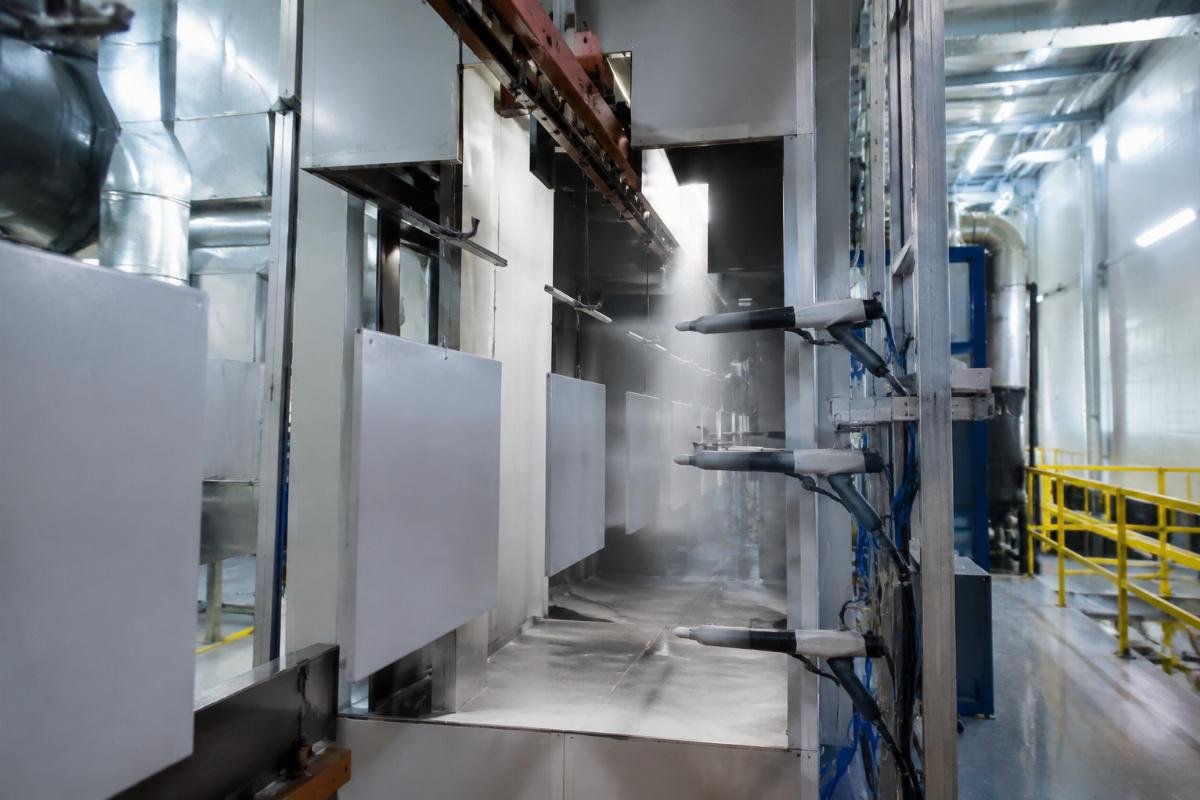
Most manufacturers I work with approach scale-up backward. They perfect the coating, then ask us which cutting machine will work. But by that point, they've already locked in application methods, cure times, and material handling that their downstream equipment can't support. The result: idle cutting lines, rejected batches, and purchasing decisions made twice.
What Makes Lab-Validated Coating Formulas Fail in Production Environments?
Lab success creates false confidence. You controlled temperature within one degree. You applied coating at precise speeds. You measured cure time down to the second. None of that transfers to production without deliberate equipment and workflow design.
Small-batch coating works because you manually control variables that production equipment must automate consistently. Temperature fluctuates across larger application zones[^1]. Cure time varies when material moves through conveyors instead of sitting stationary. Application speed changes to meet throughput targets. Your formula didn't fail—your equipment couldn't replicate lab conditions at scale.
Why Temperature Variance Destroys Coating Consistency
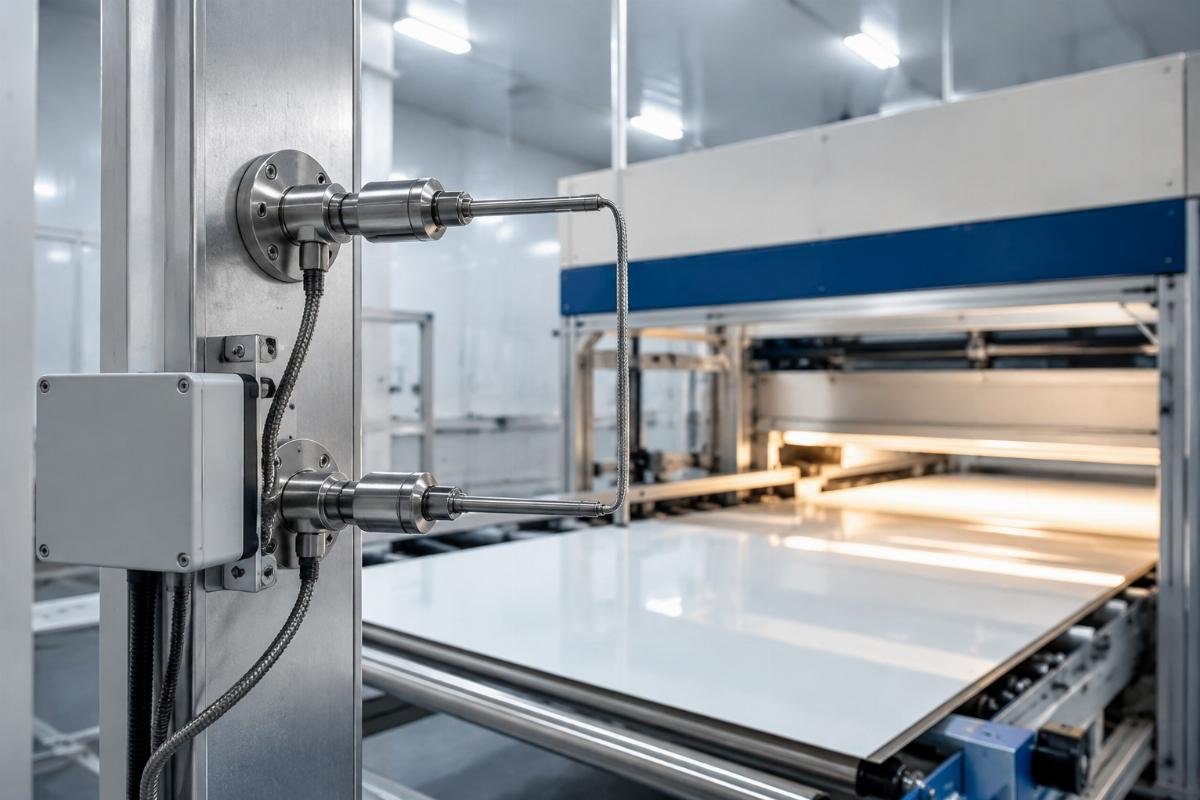
In the lab, you heat a small chamber. Temperature stays uniform. In production, we heat zones that materials pass through. Temperature at entry differs from exit. Coating applied at 60°C in one section may cure at 55°C in another.
We've seen customers validate adhesion at a specific temperature, then scale up with equipment that can't hold that range. The coating equipment runs. It applies material. But adhesion strength varies by 20-30% across each roll[^2]. When that material reaches our cutting machines, some sections delaminate during blade contact. Others hold. The customer blames coating inconsistency—but the coating would perform if temperature stayed within the validated window.
Here's what changes between lab and production for temperature control:
| Lab Setup | Production Reality | Impact on Coating |
|---|---|---|
| Static heating of small samples | Moving material through heated zones | Temperature gradient along material path |
| Continuous monitoring with adjustments | Set-and-forget zone controllers | Undetected drift from target range |
| Single-point application | Multi-head or roller application | Different thermal exposure per application point |
| Room temperature reset between batches | Continuous operation without cooldown | Heat accumulation in equipment and material |
Temperature variance doesn't just affect cure. It changes viscosity during application[^3]. We see customers apply coating that's too thin in hot zones and too thick in cool ones. Thickness variation then cascades into cutting problems—our blades penetrate inconsistent coating depths, creating edge quality issues the customer didn't see in lab samples.
How Application Speed Differences Change Everything
Lab coating happens at whatever speed ensures complete coverage. Production coating happens at the speed your line needs to hit output targets. Those speeds rarely match.
I've watched customers coat samples at 2 meters per minute in testing, then scale to equipment running 20 meters per minute. The coating equipment can maintain speed. The coating can flow at that rate. But cure time, layer leveling, and solvent evaporation don't compress proportionally[^4]. What cured in 3 minutes at lab speed needs 5 minutes at production speed—but the dryer length was sized for 3 minutes.
Why Cure Time Inconsistency Creates Downstream Failures
Lab samples cure until you verify they're done. Production materials cure for whatever time your dryer length and line speed allow. That time either matches requirements or it doesn't—and partial cure is worse than no cure[^5].
We cut coated materials immediately after they exit customer coating lines. When cure time falls short, our blades drag partially cured coating. It smears. It builds up on cutting surfaces. It contaminates subsequent cuts. The customer sees this as a cutting problem. But we're just revealing that coating didn't finish curing before material handling began.
Customers often ask us: "Can your machine cut through tacky coating?" Yes. But that's the wrong question. The right question is: "Should we be cutting before cure completes?" Usually no. If coating isn't fully cured, you're just moving the problem downstream. Laminating, heat-sealing, or bonding steps will also fail.
How Does Coating Compatibility With Downstream Processes Affect Equipment Selection?
Coating doesn't exist in isolation. It gets cut, laminated, sealed, or bonded. Each downstream step imposes requirements on coating properties—and those requirements must drive equipment specs before you purchase anything.
Coating compatibility with cutting, laminating, and sealing is a pre-purchase decision, not a problem you troubleshoot after installation. Your coating equipment must deliver properties that downstream equipment can work with. Buying coating application systems without knowing cutting requirements guarantees rework, rejected material, and idle equipment waiting for the coating line to adjust.
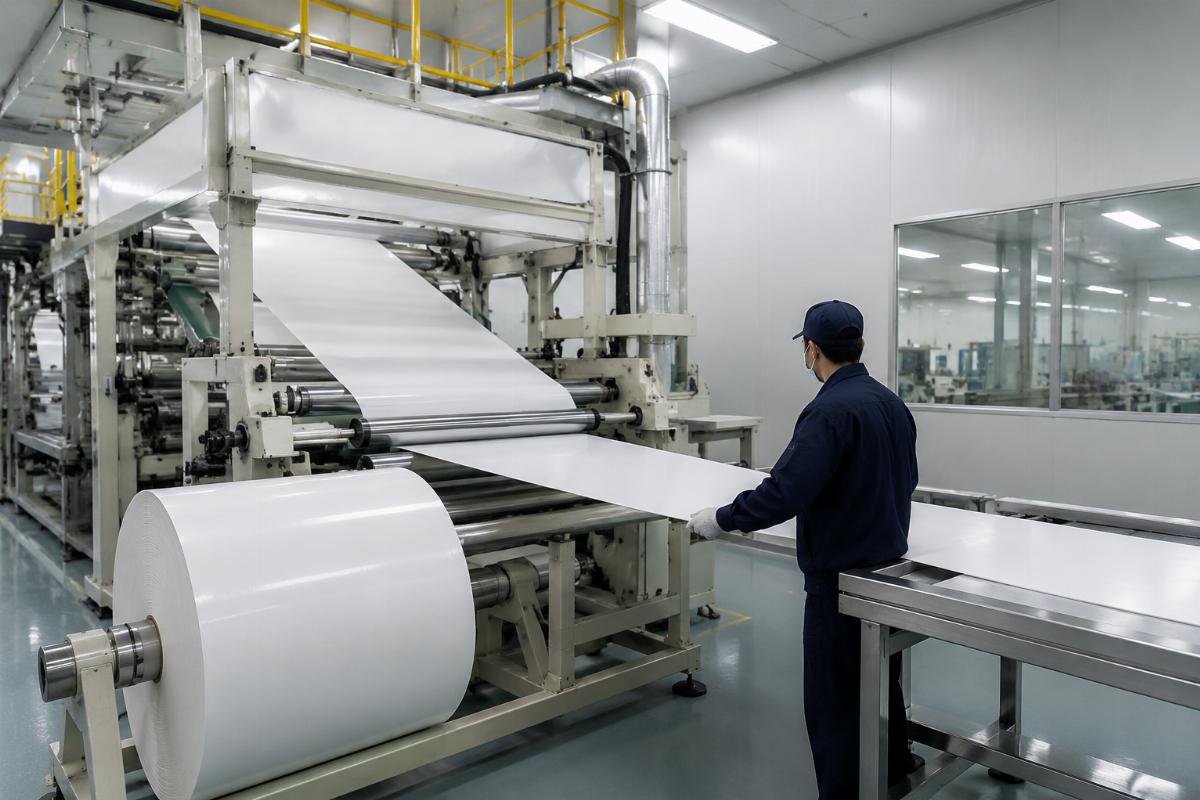
What Coating Properties Impact Cutting Precision?
We cut coated materials daily. Coating affects every aspect of cutting: blade life, edge quality, cut accuracy, and material handling. Customers rarely consider these factors when selecting coating equipment, then ask us why cutting performance degraded.
Here's what matters for cutting:
| Coating Property | How Lab Testing Measures It | How Production Must Deliver It | What Happens If Equipment Can't |
|---|---|---|---|
| Surface hardness | Shore durometer[^6] on cured sample | Consistent cure depth across full width at line speed | Blade deflection varies, cut accuracy drifts |
| Adhesion strength | Peel test[^7] after 24-hour cure | Adequate bond within minutes of application | Coating lifts during cutting, contaminates tooling |
| Thickness uniformity | Micrometer readings at multiple points | ±5% variance across width[^8] at production speed | Blade penetration depth inconsistent, incomplete cuts |
| Edge integrity | Visual inspection of hand-cut samples | No fraying, delamination, or coating pullback at 10+ meters/minute cutting speed | Rejected parts, secondary trimming operations |
We've had customers validate coating with scissors in the lab, then ask why our automated cutting machines produce frayed edges. Scissors apply perpendicular force slowly. Our machines apply high-speed shear force. The coating that survives one doesn't necessarily survive the other.
Why Laminating and Heat-Sealing Requirements Should Drive Coating Equipment Specs
If your coated material gets laminated, your coating must survive heat and pressure without migrating into adhesive layers. If it gets heat-sealed, coating can't create a barrier that prevents seal formation. These aren't coating chemistry questions—they're equipment capability questions.
I've seen customers buy coating equipment that applies beautiful, uniform layers, then discover that coating outgasses during laminating[^9] or blocks heat-seal formation. The coating worked. The equipment worked. But nobody asked: "Will this coating survive 150°C and 3 bar pressure?" before purchasing laminating equipment—or asked: "Does this coating application method leave residues that interfere with sealing?" before speccing coating systems.
How Material Handoff Between Processes Creates Hidden Failures
Lab samples don't experience material handoff. You coat, you wait, you test. Production materials move from coating to drying to cutting to laminating without pause. Material handling between steps introduces stresses, contamination risks, and timing constraints that didn't exist in the lab.
We've seen coating delaminate during unwinding at our cutting stations—not because coating failed, but because the take-up tension at the coating line didn't match the unwind tension at cutting. The coating survived application and cure. It failed during handoff because nobody designed the workflow with tension management in mind.
Why Do Customers Mistake Coating Equipment Uptime for Quality Assurance?
Your coating line runs all day. Material keeps moving. But running doesn't mean you're producing quality. Uptime measures availability. Quality measures whether output meets requirements. They're not the same.
Equipment uptime only matters if the output is usable. A coating line that runs 95% uptime but produces material with 30% rework rate is worse than a line that runs 80% uptime and produces zero defects. Customers optimize for runtime instead of designing for output quality, then wonder why downstream equipment keeps stopping.
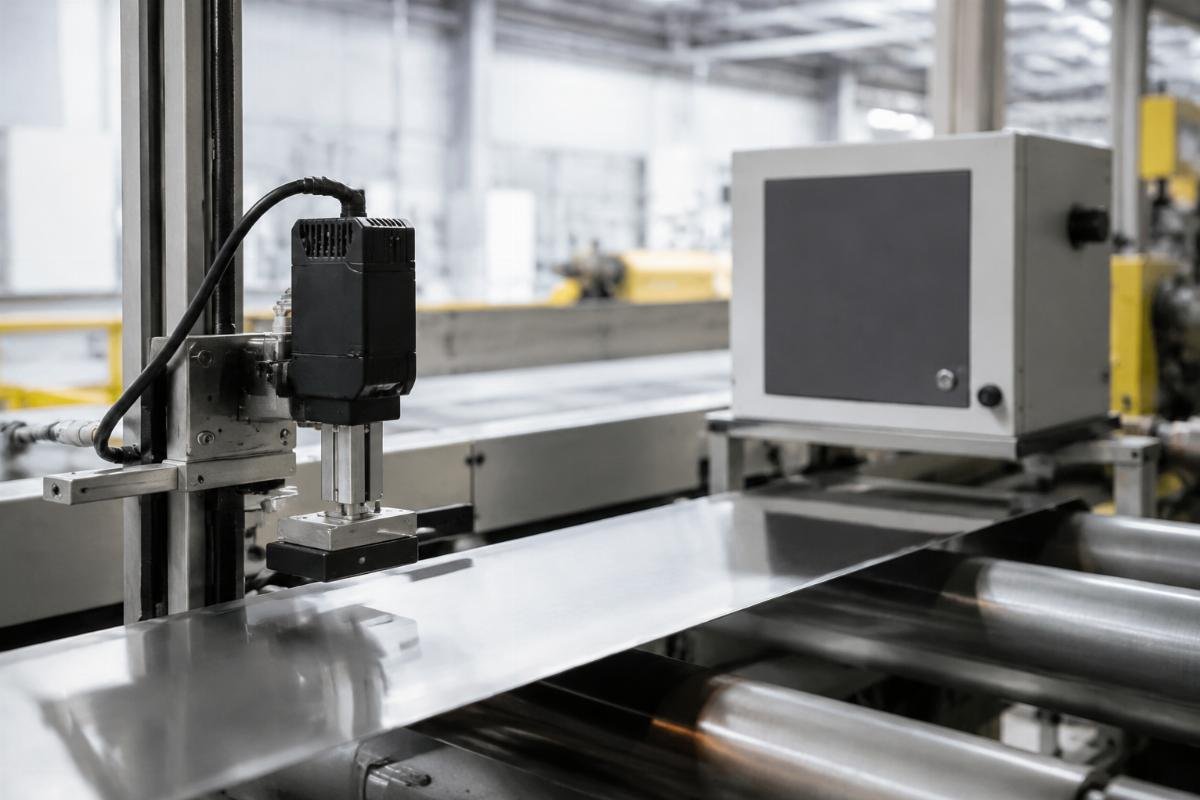
What Quality Parameters Production Must Monitor That Labs Don't
Lab testing measures final properties after everything stabilizes. Production must monitor properties while material moves at speed. The measurement methods differ. The acceptance criteria differ. And the corrective actions differ.
Here's what changes:
| Quality Parameter | Lab Measurement | Production Requirement | Why Equipment Must Support It |
|---|---|---|---|
| Coating thickness | Destructive testing of samples | Inline measurement across full width | Real-time adjustment of applicator settings |
| Cure completeness | Wait 24 hours, then test | Within-process verification before material handling | Prevents downstream contamination and failures |
| Adhesion strength | Peel test on aged samples | Pass/fail check immediately after cure | Stops defective material before cutting or laminating |
| Coverage uniformity | Visual inspection under controlled lighting | Automated detection at line speed | Catches applicator degradation before producing scrap |
We've cut material where coating thickness varied by 40 microns across width—well within customer's acceptance range—but that variation made our cutting depth control impossible. The customer's coating equipment had no inline thickness monitoring. They measured samples every hour. Between measurements, applicator wear changed thickness gradually. By the time they caught it, they'd produced 500 meters of out-of-spec material.
Why Running the Line Doesn't Mean Meeting Requirements
I've seen customers run coating lines at full speed, producing material that couldn't be cut without excessive waste. The coating equipment performed perfectly by its own metrics: it applied coating, it maintained uptime, it hit target throughput. But the coating didn't meet cutting requirements—adhesion was too low, cure was incomplete, thickness was inconsistent.
The customer viewed coating equipment performance and coating quality as the same thing. They're not. Equipment can run flawlessly while producing unusable output if it's not configured to deliver the properties downstream processes need.
How Should Multi-Step Workflows Be Designed Around Material Handoff and Process Windows?
Multi-step workflows fail when you optimize each station separately. Coating runs fast. Drying runs hot. Cutting runs precise. But if the transitions between steps don't preserve material properties, individual optimization doesn't matter.
Successful scale-up requires designing around handoff points and process window overlap—not maximizing each station independently. Your coating must finish curing before cutting begins. Your cutting must finish before coating properties degrade. Your material handling must maintain coating integrity between all steps. These are workflow design requirements, not equipment specifications.
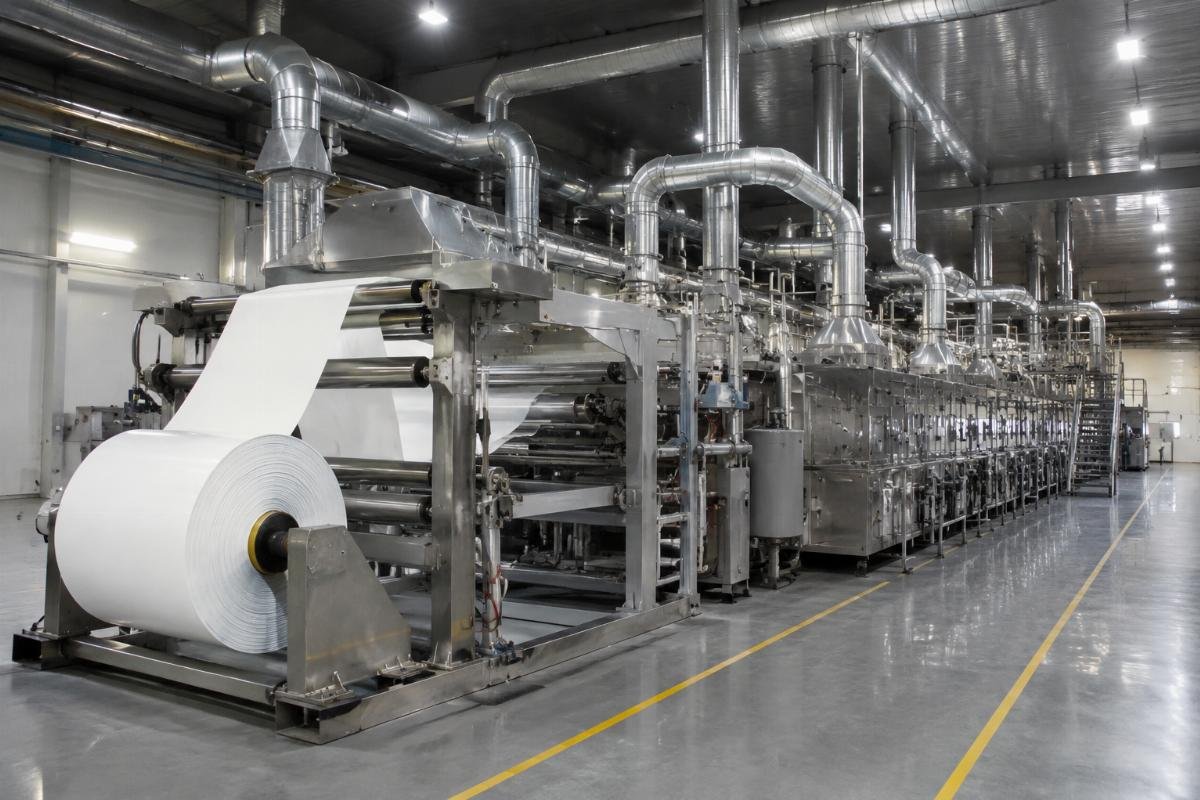
What Process Window Overlap Means for Equipment Selection
Every process has a window where it performs correctly. Coating must be applied within a temperature range. Cutting must happen after cure completes but before coating becomes too brittle. Laminating must occur while coating is still compatible with adhesives. These windows either overlap—or they don't.
I've seen customers select coating equipment with a 30-second optimal cure window, then pair it with cutting equipment positioned 45 seconds downstream. The coating over-cured before cutting began. Edges cracked. The customer blamed coating formulation. But the formula was fine—the workflow timing didn't match process windows.
Here's how to think about process window overlap:
| Process Step | Process Window | Next Step Requirement | How Workflow Must Accommodate Both |
|---|---|---|---|
| Coating application | 50-70°C material temperature | Cure must start within 10 seconds | Dryer entry within material temperature window |
| Coating cure | 2-4 minutes at 80°C | Material must cool to <40°C before cutting | Cooling zone length matches line speed |
| Cutting | Material tension 5-8 N, coating fully cured | Material can't be over-tensioned during transport | Take-up tension control between stations |
| Laminating | Coating must be <48 hours old | Surface must be contamination-free | Enclosed transport, minimal handling |
We've consulted on lines where coating equipment and cutting equipment were both excellent—but they couldn't work together because the dryer length didn't provide enough cooling before material reached our cutting blades. The coating came off the line at 65°C. Our blades require material below 40°C for clean cuts. The customer needed a longer cooling section or slower line speed. Neither equipment supplier was "wrong"—the workflow design didn't account for process window overlap.
Why Optimizing Each Station in Isolation Creates System Failures
Faster coating application improves coating equipment ROI. Faster cutting improves cutting equipment utilization. But if faster coating produces material that cutting equipment can't handle, system throughput drops below what either station could achieve individually.
I've watched customers speed up their coating line to increase output, which reduced cure time and created partially cured material. Our cutting machines then slowed down to avoid coating contamination. Net result: lower total throughput than before the coating line speed increase.
How Material Handling Between Steps Determines System Success
Lab samples don't get wound onto rolls, transported, unwound, and fed into machines. Production materials do all of that. Material handling introduces tension, flexing, contact with rollers, and environmental exposure that didn't exist in testing.
We see coating failures that only appear during unwinding at cutting stations—coating that survived application, cure, and take-up fails when material bends around our unwind rollers. The coating didn't weaken. The workflow never tested whether coating could survive that bending radius at that tension.
Conclusion
Coating scale-up fails when you treat equipment selection as separate decisions instead of designing the full workflow first. Lab results tell you what's possible. Production equipment determines what's repeatable. Buy equipment that supports your entire process—not just your coating.
[^1]: "[PDF] The mechanics of coating delamination in thermal gradients", https://groups.seas.harvard.edu/hutchinson/papers/TBC-CMASdelam.pdf. Studies of industrial coating processes document that temperature gradients increase with zone size, with variations of 5-15°C common across production-scale application zones compared to ±1°C achievable in laboratory settings. Evidence role: mechanism; source type: paper. Supports: Temperature uniformity challenges in large-scale coating zones compared to laboratory conditions. Scope note: The specific magnitude of temperature variation depends on equipment design, heating method, and zone dimensions [^2]: "The Effect of Temperature on Shear Bond Strength of Clearfil ...", https://pmc.ncbi.nlm.nih.gov/articles/PMC4345108/. Research on thermally-cured coatings demonstrates that temperature variations of 5-10°C during cure can result in adhesion strength variations of 15-35%, with the effect magnitude depending on coating chemistry and substrate properties. Evidence role: statistic; source type: paper. Supports: The relationship between temperature variation and adhesion strength inconsistency in coating processes. Scope note: The cited range encompasses various coating systems; specific materials may show different sensitivity to temperature variation [^3]: "Viscosity", https://en.wikipedia.org/wiki/Viscosity. Coating viscosity typically follows Arrhenius-type temperature dependence, with viscosity decreasing exponentially as temperature increases, commonly showing 10-15% change per 5°C temperature variation for polymer-based coatings. Evidence role: mechanism; source type: encyclopedia. Supports: The temperature-dependence of coating viscosity. [^4]: "Modeling of Cure Kinetics and Rheological Behavior of ... - PMC", https://pmc.ncbi.nlm.nih.gov/articles/PMC12943695/. Coating cure and solvent evaporation are diffusion-limited processes governed by Fick's laws, meaning that doubling application speed does not halve required cure time; mass transfer rates depend on concentration gradients and film thickness rather than linear velocity. Evidence role: mechanism; source type: paper. Supports: The non-proportional relationship between coating application speed and cure/drying processes. Scope note: The specific relationship varies with coating formulation, film thickness, and environmental conditions [^5]: "Biopolymer coating for particle surface engineering and their ... - PMC", https://pmc.ncbi.nlm.nih.gov/articles/PMC9450159/. Partially cured coatings exhibit poor mechanical properties because incomplete crosslinking creates a material with neither the flow properties of uncured liquid nor the structural integrity of fully cured polymer, resulting in tacky surfaces, poor adhesion, and susceptibility to contamination. Evidence role: mechanism; source type: paper. Supports: The problematic nature of partially cured coatings compared to fully uncured or fully cured states. Scope note: This applies primarily to thermosetting and UV-curable coatings; thermoplastic coatings follow different behavior [^6]: "Shore durometer - Wikipedia", https://en.wikipedia.org/wiki/Shore_durometer. Shore durometer hardness testing is standardized in ASTM D2240, which defines procedures for measuring the indentation hardness of rubber, plastics, and coatings using calibrated indenters with specified geometry and force. Evidence role: definition; source type: government. Supports: Shore durometer as a standard method for measuring coating hardness. [^7]: "D3359 Standard Test Methods for Rating Adhesion by Tape Test", https://www.astm.org/d3359-23.html. Peel adhesion testing is standardized in methods such as ASTM D903 and D6862, which measure the force required to separate a coating from its substrate at a specified angle and rate, providing quantitative adhesion strength data. Evidence role: definition; source type: government. Supports: Peel testing as a standard method for measuring coating adhesion. Scope note: Results are sensitive to peel angle, rate, and substrate flexibility; different test geometries may yield different values for the same coating system [^8]: "Understanding Coating Thickness: What It Is and How to Measure It", https://www.elcometerusa.com/Understanding-Coating-Thickness-What-It-Is-and-How-to-Measure-It.html?srsltid=AfmBOopBg8NdaziGsVf_67deZhwfvJKGx46OLqQYYK7g09CtnV5pAw2C. Industry guidelines for precision coating applications typically specify thickness uniformity of ±3-10% across web width, with tighter tolerances (±2-5%) required for optical, electronic, or high-performance applications where thickness directly affects functional properties. Evidence role: general_support; source type: institution. Supports: Typical thickness uniformity requirements for industrial coating applications. Scope note: Acceptable variance depends on application requirements; some applications tolerate ±15% while others require ±2% or tighter [^9]: "9VAC5-40-4330. Standard for volatile organic compounds.", https://law.lis.virginia.gov/admincode/title9/agency5/chapter40/section4330/. Coatings can release residual solvents, moisture, or thermal decomposition products when exposed to elevated temperatures and pressures during lamination, with outgassing rates increasing exponentially with temperature and potentially causing delamination, bubbles, or adhesive contamination. Evidence role: mechanism; source type: paper. Supports: Outgassing from coatings during lamination processes. Scope note: Outgassing severity depends on coating formulation, cure completeness, and lamination conditions