Arbutin CAS#497-76-7

Arbutin, a derivative of hydroquinone, is a naturally occurring compound extracted primarily from the bearberry plant (Arctostaphylos uva-ursi). It is renowned in the skincare industry for its skin lightening properties, making it a popular ingredient in cosmetic products designed to reduce hyperpigmentation and even out skin tone. Chemically, arbutin is ??-glucosiduronic acid of hydroquinone, with the molecular formula C12H12O7. Its mechanism of action involves the inhibition of tyrosinase, a key enzyme in the melanin biosynthesis pathway. By reducing melanin production, arbutin effectively lightens the skin without the risk of irritation often associated with hydroquinone. Arbutin is valued for its safety profile, as it is considered less irritating and more stable compared to other skin lightening agents. It is also known for its antioxidant properties, which contribute to its skin brightening effects and overall skin health benefits.

In summary, arbutin is a reliable and gentle alternative for skin lightening, offering a natural approach to reducing pigmentation issues while promoting a more radiant and even complexion. Its use in skincare formulations is favored for its efficacy and mildness, making it suitable for various skin types.

Arbutin CAS#497-76-7
In Stock
FDA EU Reg. ISO 9001 HACCP Halal Kosher GMP

Technical Specifications

Product Name Arbutin CAS#497-76-7

Full COA, MSDS, FDA/EU compliance documentation and third-party lab reports available upon request.

Product Description

Arbutin, a derivative of hydroquinone, is a naturally occurring compound extracted primarily from the bearberry plant (Arctostaphylos uva-ursi). It is renowned in the skincare industry for its skin lightening properties, making it a popular ingredient in cosmetic products designed to reduce hyperpigmentation and even out skin tone.

Chemically, arbutin is ??-glucosiduronic acid of hydroquinone, with the molecular formula C12H12O7. Its mechanism of action involves the inhibition of tyrosinase, a key enzyme in the melanin biosynthesis pathway. By reducing melanin production, arbutin effectively lightens the skin without the risk of irritation often associated with hydroquinone.

Arbutin is valued for its safety profile, as it is considered less irritating and more stable compared to other skin lightening agents. It is also known for its antioxidant properties, which contribute to its skin brightening effects and overall skin health benefits.

In summary, arbutin is a reliable and gentle alternative for skin lightening, offering a natural approach to reducing pigmentation issues while promoting a more radiant and even complexion. Its use in skincare formulations is favored for its efficacy and mildness, making it suitable for various skin types.

Description

Melting point 195-198???C
Boiling point 375.31??C (rough estimate)
alpha -64 o (c=3)
density 1.3582 (rough estimate)
refractive index -65.5 ?? (C=4, H2O)
storage temp. Inert atmosphere,Room Temperature
solubility H2O: 50?mg/mL hot, clear
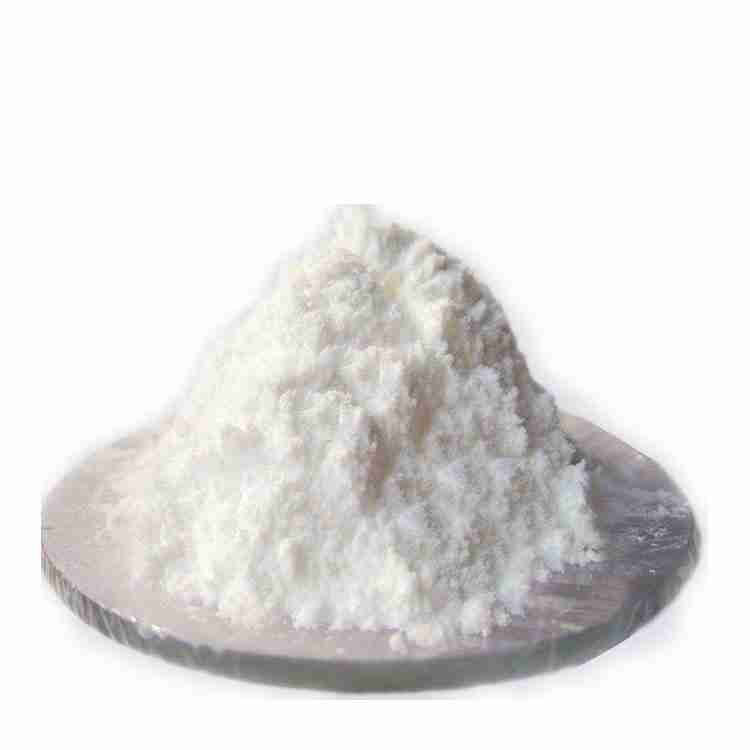
form Solid
pka 10.10??0.15(Predicted)
color White
optical activity [??]/D -64.0??2.0??, c = 3 in H2O
Water Solubility 10-15 g/100 mL at 20 oC
Sensitive Hygroscopic
Merck 14,773
BRN 89673
Stability: Stable. Hygroscopic – store under dry nitrogen.
InChIKey BJRNKVDFDLYUGJ-RMPHRYRLSA-N
LogP -1.350
CAS DataBase Reference 497-76-7(CAS DataBase Reference)
EPA Substance Registry System .beta.-D-Glucopyranoside, 4-hydroxyphenyl (497-76-7)
Safety Information
Hazard Codes Xn
Risk Statements 20/21/22-36/37/38
Safety Statements 22-24/25-36-26
WGK Germany 3
RTECS CE8863000
F 3-10-23
HS Code 29389090
Hazardous Substances Data 497-76-7(Hazardous Substances Data)
Related Products
Isothiazolinones CAS#26172-55-4
Daily Chemicals

Isothiazolinones CAS#26172-55-4

Isothiazolinones are a class of broad-spectrum, highly effective fungicides and biocides, composed of 5-chloro-2-methyl-4-thiazoline-3-one (CMI) and 2-methyl-4-thiazoline-3-one (MI). These compounds are recognized for their rapid action against microbes, inhibiting their growth upon contact and leading to cell death 9. They are characterized by high biocidal efficiency, good degradation, no residual, safe operation, compatibility, stabilization, and low operational costs 9. Isothiazolinones are used in various industrial applications, including cooling water systems and wastewater treatment in fields such as oil, papermaking, pesticides, cutting oils, leather, detergents, and cosmetics. They are compatible with chlorine and most cationic, anionic, and non-ionic surfactants, and at higher dosages, they exhibit excellent bio-sludge stripping effects 9. The active content in Isothiazolinones-based products typically ranges from 1.5% to 15%, with a pH value between 1.0 and 5.0, depending on the grade. They are available in various forms such as transparent liquids and are packaged in quantities that can be tailored to specific industrial needs 10. Safety precautions are essential when handling Isothiazolinones due to their corrosive nature; they should not come into contact with skin or eyes, and protective equipment is recommended during use

View Details →
Dioctyl Sebacate CAS# 122-62-3
Daily Chemicals

Dioctyl Sebacate CAS# 122-62-3

Dioctyl sebacate, also known as bis-2-ethylhexyl sebacate, referred to as DOS, is produced by the esterification reaction of sebacic acid and 2-ethylhexanol. Suitable for polyvinyl chloride, vinyl chloride copolymer, nitrocellulose, ethyl cellulose and synthetic rubber, etc. It has high plasticizing efficiency and low volatility. It has excellent cold resistance, good heat resistance, light resistance and electrical insulation. It also has good lubricity when heated, making the product look and feel good, especially Suitable for making cold-resistant wire and cable materials, artificial leather, films, plates, sheets, etc.  

View Details →
L-Menthol CAS #2216-51-5
Daily Chemicals

L-Menthol CAS #2216-51-5

Menthol, also known as hexahydrothymol, is commonly known as L-menthol, and its scientific name is 5-methyl-2-isopropyl-cyclohexanol. It is a very important cycloterpene alcohol. L-menthol has a characteristic mint aroma and has a cooling effect. Racemic ?C menthol also has a cooling effect, while other isomers have no cooling effect. L-menthol accounts for a large proportion of applications in medicine and health. It can be used as poultice, ointment, analgesic, local anesthetic, cooling agent, antipruritic agent, mouthwash, bactericide, and for the treatment of toothache, Tablets for stomach pain, neuralgia, etc.; the second largest use is spices. L-menthol is a spice in demand among cyclic monoterpene alcohols. It can be used as tobacco spices, used with peppermint oil to prepare toothpaste flavors, and other spices. Toilet water; menthol can also be used as a flavoring agent for a variety of foods, such as candies, chewing gum, cakes, fruit wine, refreshing drinks, etc.

View Details →
2-Hydroxyethylurea CAS# 2078-71-9
Daily Chemicals

2-Hydroxyethylurea CAS# 2078-71-9

Hydroxyethyl urea is a good moisturizer and is widely used in cosmetic moisturizing products. It has a similar effect to glycerin, but compared with glycerin, the moisturizing effect of hydroxyethyl urea is more significant. Its main characteristics are to provide moisturizing functions for skin care products without a sticky feel. At the same time, it can increase skin elasticity and replenish skin moisture. It has good compatibility with various skin care raw materials, is gentle and non-irritating. Hydroxyethyl urea also has a high cost performance. Compared with expensive moisturizers, hydroxyethyl urea can achieve the same effect at a lower formulation cost.

View Details →
Ready to Order?

Get Free Samples & Full
Certification Package Today

No minimum order for samples. COA, MSDS, FDA/EU certificates and third-party lab reports delivered with every sample. Technical team responds within 24 hours.